Flamenco Caves of Sacromonte: The Ultimate Guide
The smell hits first. Damp limestone, old whitewash, and crushed spearmint drifting up from a tiny terrace down by the Darro river. If you are searching for authentic cuevas flamenco granada, you will quickly notice that dozens of ticket booths along Plaza Nueva want to herd you onto charter minibuses. Resist that urge. Sacromonte is best approached slowly, on foot or via the rattling red city bus, as the afternoon heat breaks over the valley.
Tucked into the rugged flank of Valparaíso hill, Sacromonte is unlike any other neighborhood in Spain. For over five hundred years, Romani families dug into the calcarenite stone to build cavern homes that stay twenty degrees cooler than the baking Andalusian sun outside. Inside these whitewashed hollows, an intense and deeply personal style of flamenco took shape. This guide breaks down how to navigate the steep cobblestone paths, pick a cave that will not treat you like a walking wallet, and experience the thunderous rhythm of local artists up close.
Book your flamenco show granada experience:
The Living History of Sacromonte Flamenco Caves
These caves were not built as tourist entertainment. After the fall of Moorish Granada in 1492, Jewish and Muslim residents fled the city center alongside the newly arrived Romani people, settling along the scrubby ravines beyond the city walls. They carved into the soft rock because it was cheap, secure, and malleable. By the mid-nineteenth century, travelers like Washington Irving and Alexandre Dumas were already hiking up the dust trails to hear local musicians play late into the morning.
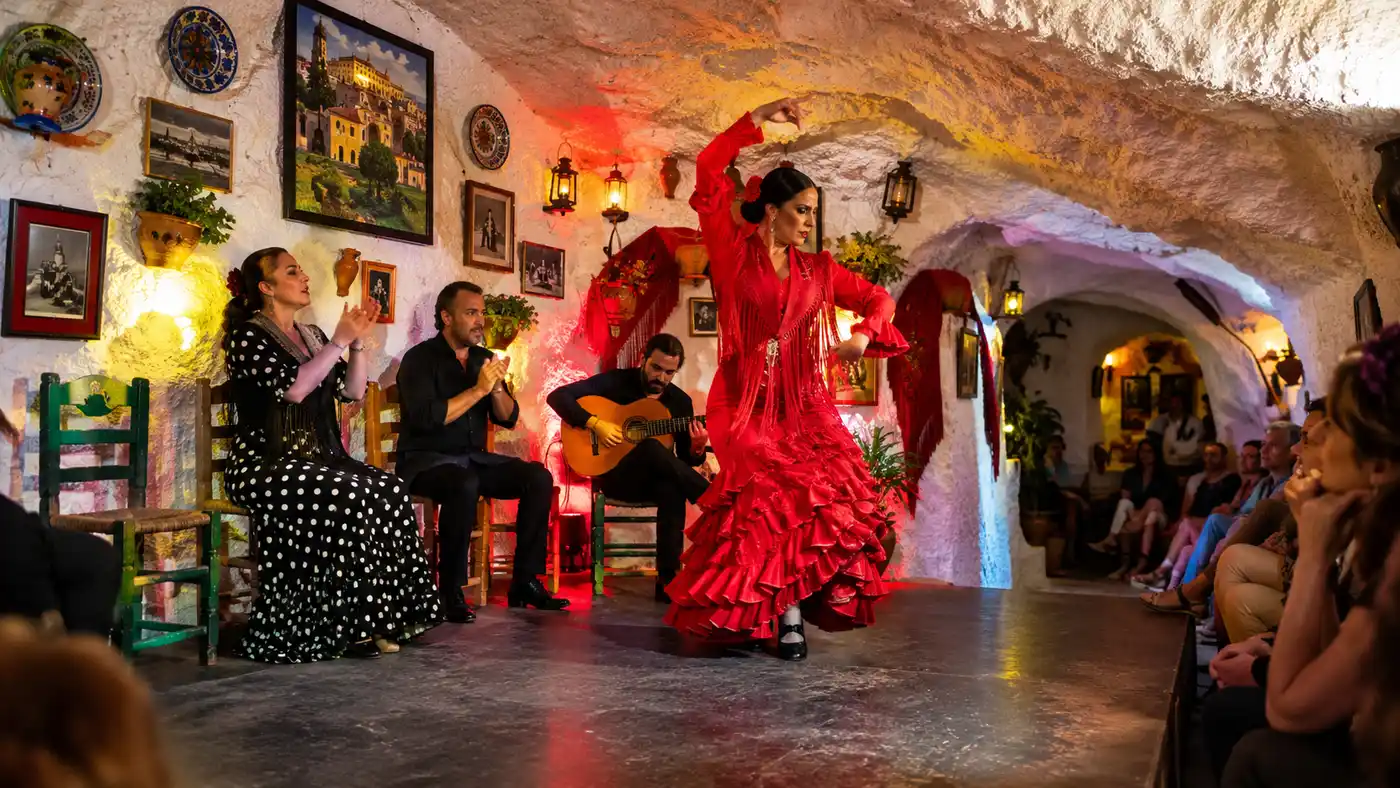
The style of performance you encounter in a Sacromonte cave differs drastically from a standard theater stage in Seville or Madrid. Here, you are watching the zambra gitana. Rather than performing elevated on a wooden platform separated from the room by stage lighting, artists perform in the narrow center of the whitewashed vault. The audience sits on rustic wooden chairs along the curved rock walls, close enough that a dancer's ruffled skirt will brush your shins on every rapid turn. If you want to dive deeper into the ritual roots of this art, check out our guide to La Zambra Gitana: Granada's Sacred Gypsy Flamenco Ritual.
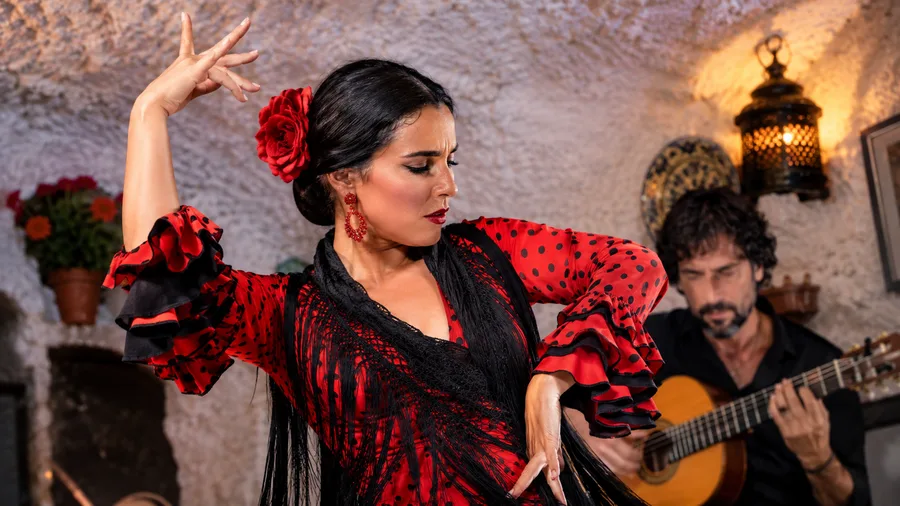
Acoustics in a cave behave strangely. The curved stone softens sharp guitar highs while magnifying the low, guttural vibration of the cante jondo (deep song). Footwork sounds like rolling thunder. In a room barely three meters wide, there is simply nowhere for a mediocre performer to hide. You see every vein on the singer's neck and every speck of sweat flying off the bailaora's temple.
Pro tip: Arrive in Sacromonte about 45 minutes before nightfall. Walk up to the mirador near the Ermita de San Miguel Alto or grab a beer on a street ledge to watch the Alhambra across the gorge turn amber under the setting sun.
Choosing the Right Cave: Top Venues Compared
Every cave claims to be the most authentic, the oldest, or the favored haunt of kings. Honestly, some are geared toward large bus tours that bus sixty package-deal tourists in, rush through a forty-minute set, and bus them out. Others have stayed in the hands of the same lineage for three or four generations, maintaining genuine artistic weight. Knowing where to spend your money makes the difference between an unforgettable evening and an overpriced disappointment.
Cueva de la Rocío is perhaps the most famous, founded in 1956 by the Maya family. The cave is long, brightly lit, and packed with polished copper jugs hanging from the ceiling. Michelle Obama came here in 2010, which pushed their profile through the roof. It is lively and well-run, though it can feel crowded on weekend nights when groups arrive back-to-back.
A few bends farther down the Camino del Sacromonte sits Venta El Gallo. This cave feels slightly more rustic. Its main draw is a stunning outdoor terrace overlooking the illuminated battlements of the Alhambra, making it an incredible spot for a pre-show drink. Inside, the dancing leans traditional and heavy, with a roster of seasoned local artists from the Sacromonte dynasty.
Cueva Los Tarantos, operating since 1972, has three connected caves that allow for slightly wider seating. They run multiple hour-long shows every night. While it handles high volumes of visitors, their musical curation remains sharp, regularly featuring younger guitarists and singers who perform with dizzying speed.
If you prefer an untouched museum atmosphere, Cueva de la Canastera delivers. Named after the legendary dancer María la Canastera, who lived and taught here, the front room still looks like a traditional 1950s family dwelling with brass cooking pots, family photographs, and hand-painted ceramic plates adorning every surface.
| Cave Venue | Approx. Price | Show Length | Atmosphere | Best For |
|---|---|---|---|---|
| Cueva de la Rocío | €35 | 50 mins | Vibrant, bustling, family-run | First-timers wanting classic zambra |
| Venta El Gallo | €38 | 60 mins | Intimate, great terrace views | Romance and Alhambra panoramas |
| Cueva Los Tarantos | €28 | 60 mins | Dynamic, cavernous, energetic | Budget-conscious visitors |
| Cueva de la Canastera | €32 | 55 mins | Historic, decorative, nostalgic | Folk history buffs and photography |
Note: Most caves offer dinner packages, but I suggest skipping them. Food is prepared in cramped hillside kitchens and rarely matches the quality of tapas spots down in the city center.
Tickets, Timing, and What It Really Costs
Entry fees across Sacromonte hover between €25 and €40 for a standard ticket, which almost always includes a single drink, usually local wine, beer, or a glass of sangria. If you pay more than €45 for a show without transport, you are overpaying. Booking directly through the venue website or stopping by their door the afternoon before will save you third-party markup fees that booking desks in town tack on.
Summer schedules run late. The first show typically starts around 8:30 PM, but the 10:00 PM or 10:30 PM performance often holds more emotional charge. The day-trippers have usually left for their hotels by then, and the performers seem to lean deeper into improvisational playing once the formal rush has quieted down.
Keep these ticketing realities in mind before you pull out your credit card:
- Skip the transport package: Tour sellers offer €15 hotel transfers, but the local C34 city bus costs less than €2 each way and drops you right at the cave doors.
- Drink choices matter: Caves serve passable house wine, but bottled Alhambra Especial beer is consistently cold and reliable.
- Front row seating: Seats are rarely assigned by number. Getting in line twenty minutes before the doors open guarantees you a front-row chair right against the dancer's lane.
- Cash on hand: Card machines work intermittently inside subterranean stone rooms due to poor mobile reception. Keep €20 in cash for extra drinks or musician tips.
Book your flamenco show granada experience:
Navigating the Hillside: How to Get There
Reaching Sacromonte requires a small bit of effort. The neighborhood stretches along a narrow mountain road lacking wide sidewalks, carved into the cliff high above the Darro gorge. You will be walking on cobblestones polished to a slick sheen by centuries of footsteps, so wear shoes with rubber grip. Forget high heels completely.
Walking from Plaza Nueva up the Carrera del Darro is one of the prettiest urban strolls in southern Europe. The rushing sound of the stream keeps you company while seventeenth-century stone mansions rise on your left. As you pass the Paseo de los Tristes, the street tilts upward into the Cuesta del Chapiz. Turn right onto the Camino del Sacromonte, and the road winds past whitewashed walls, prickly pear cactus clusters, and the occasional barking dog behind an iron gate. The climb takes roughly 30 minutes at an easy pace.
If you prefer riding, transport options are straightforward:
- Microbus C34: This miniature red bus navigates the impossibly tight curves every 20 minutes from Plaza Nueva. It runs until roughly 11:00 PM on weekdays and later on weekends.
- Local Taxis: You can catch a white city taxi at Plaza Nueva. Expect to pay between €7 and €10 for the short ride up the hill. Make sure the driver turns on the meter.
- Walking back down: Taxis are hard to hail in Sacromonte after a show. Plan on walking down through the quiet streets or catching the last scheduled microbus.
What to Expect Inside the Whitewashed Tunnel
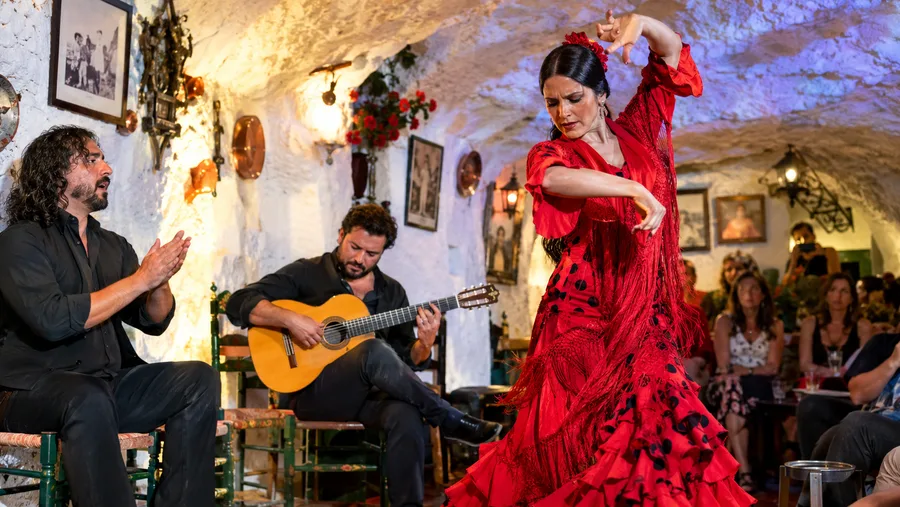
Entering a cave can feel mildly claustrophobic for the first two minutes. The ceilings are low, whitewashed repeatedly with lime to keep the air fresh, and studded with historic memorabilia. You will find copper cauldrons, iron horse bits, framed black-and-white portraits of long-dead matriarchs, and decorative ceramics from Fajalauza hanging from every bare space. The air carries a cool, earthy scent that never quite leaves the rock.
Seating is tight. You will sit shoulder-to-shoulder with strangers on hand-painted rush chairs. When the show begins, lights dim slightly, but rarely to complete darkness. Zambra is social music. The guitar strikes a rhythm, the palm-clappers (palmeros) lock in, and the singer begins with a deep, undulating cry that echoes off the stone. There is no microphone amplification in the smaller caves; none is needed.
The intensity builds in waves. Unlike formal classical theater, audience participation here is vocal and communal. You will hear locals call out ¡Olé!, ¡Arsa!, or ¡Agua! when a dancer lands a complex heel roll or a singer nails an agonizing vocal run. Do not try to clap along unless you are deeply schooled in twelve-beat flamenco rhythm, because clapping off-beat ruins the timing for the performers. Watch, listen, sip your drink, and let the physical rumble of the floorboards vibrate straight through your chair.
Frequently Asked Questions about cuevas flamenco granada
Are the flamenco caves in Sacromonte a tourist trap?
Some caves lean commercial with rushed schedules for tour groups, but the tradition itself is authentic. Caves like Venta El Gallo and Cueva de la Canastera still hire world-class musicians and preserve genuine Romani zambra culture.
How far in advance do I need to book a show?
Booking two or three days in advance is wise during spring and autumn peak seasons. In quiet winter months, you can often pick up a ticket at the cave entrance on the afternoon of the performance.
Is Sacromonte safe to walk through at night?
The main road, Camino del Sacromonte, is well-lit and populated with visitors and staff until after midnight. Straying down unlit, isolated dirt alleys high above the neighborhood is not recommended late at night, but the main route down to Plaza Nueva is safe.
Can children attend cave flamenco shows?
Yes, children are welcome at nearly all cave venues. Flamenco is a family art form in southern Spain, though keep in mind that the tight quarters and loud footwork can sometimes be overwhelming for very young toddlers.
Quick Reference
- Show price: €25 to €38 (drink included)
- Best transit: Microbus C34 from Plaza Nueva (€1.40)
- Average duration: 50 to 60 minutes
- Walking time from center: 25 to 35 minutes uphill
- Footwear rule: Flat shoes with rubber grip
Book your flamenco show granada experience:
Before You Climb the Hill
Sacromonte has weathered centuries of change, shifting from an ostracized fringe settlement into a globally recognized cradle of musical heritage. While modern commercialism touches every historic neighborhood in Europe, something stubborn and ancient remains alive in these rock vaults. When the room goes quiet, the guitar starts its slow rasgueado, and a singer leans back to summon a song passed down through generations, you will understand why travelers still make the trek up this sun-bleached hill. Lace up some comfortable walking shoes, skip the tourist minibuses, and let the cave rhythms tell their own story.
Read more about flamenco show granada.